
Plaquemines Parish Criminal Docket Searches
Start your Plaquemines Parish criminal docket search at the Clerk of Court’s Plaquemines Cott eSearch portal. Read the access notice first. Guests can search the indices at no charge. What guests cannot see is civil or criminal docket detail or document images. That material sits behind a subscription. The subscription opens the criminal application and its docket history. For free public inspection of an available criminal record, the clerk’s counter is still the route.
When you go, bring the docket or case number. Bring the division if known, and enough identifying case information for the clerk to pull the file. The guest-facing form hides its full set of criminal search fields. So no one can promise you a specific public name or number format. Before you treat an empty result as final, check Cott’s Certified Dates page, especially for an older matter. Coverage limits explain many misses.
- Open the parish-specific Cott eSearch page and review the Certified Dates coverage for criminal indices.
- Use guest access for free index research, or a named subscription when criminal docket history or images are required.
- Match the available case number, division, and record information instead of assuming a similarly named entry is the same matter.
- Read the chronology for the newest minute, setting, order, plea, or disposition entry.
- Ask the Clerk for inspection, a copy, an extract, or certification when the official record is needed.
Plaquemines Parish Criminal Docket Access
Cott keeps its free index search separate from criminal docket history and images. The criminal index reaches back to January 4, 1966. Criminal images start much later, September 6, 2006, with early years still being added. That gap matters. An index entry proves a record was entered. Yet it gives you no sequence of court events and no image of the filing. The portal also warns that online material is not the official record.
For anything date-sensitive, treat the online result as a lead. Ask the criminal department for the underlying history or minute entry. The Clerk lists $1 per page for a criminal copy. A conformed copy runs $3, and certification is $5 plus copy cost. An extract of court minutes costs $10, or $15 certified. Fees and access rules can change. Confirm both the request and the amount with the office before you pay. Source: the 25th JDC Division A page
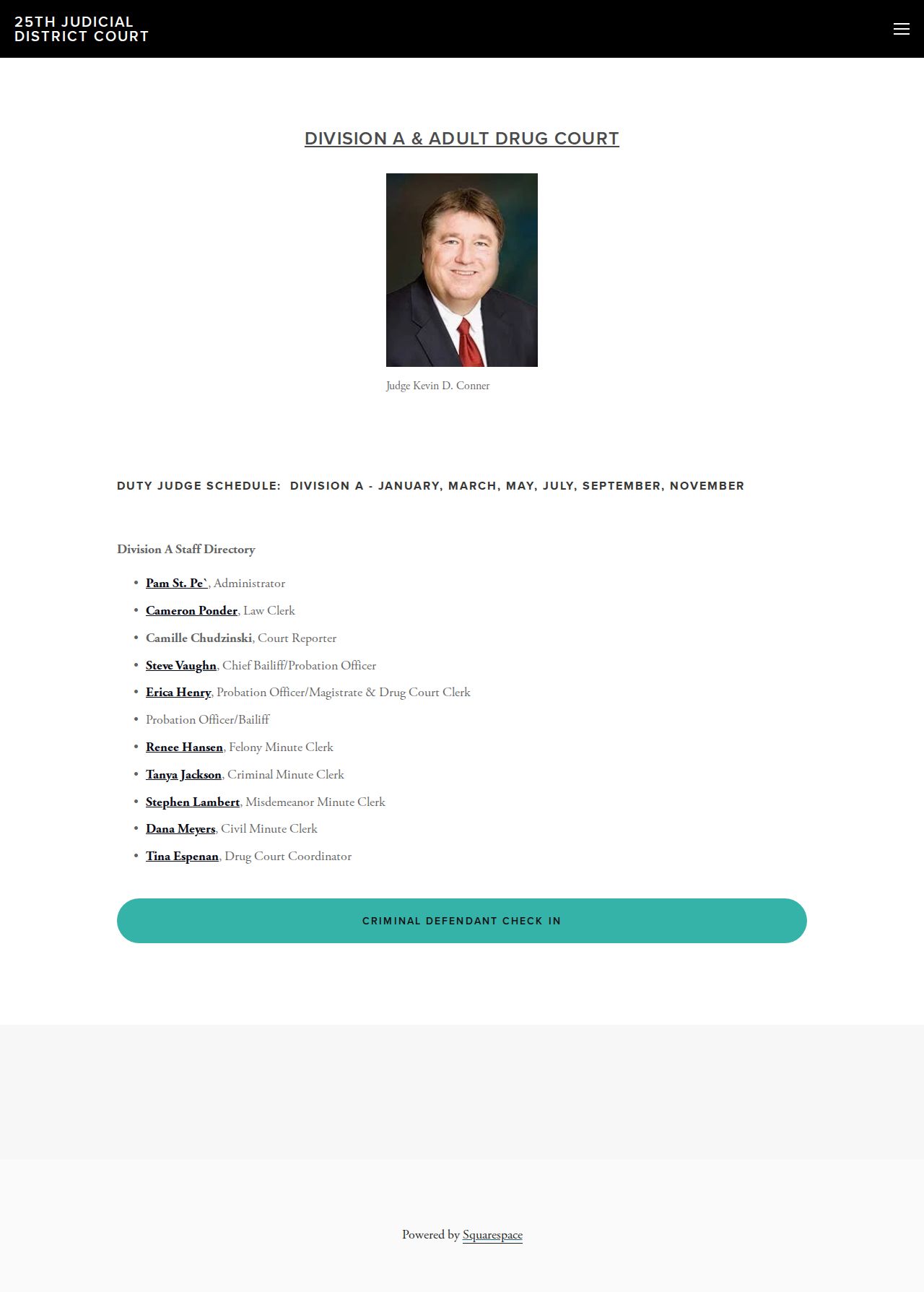
Knowing the division helps you find a case, but it is no substitute for the case history itself. Division A handles other assigned matters too. So a Plaquemines Parish docket request should state the case number and the document or date range you want, rather than lean on the division alone.
Criminal Dockets: What They Show
A Plaquemines criminal docket ledger is a chronology, not merely a charge label. Local rules and clerk materials support a cautious list of fields: docket number, Division A or B, charge or offense, offense month, arraignment, motion or pretrial settings, trial setting, plea, judgment or disposition, post-conviction activity, transcript request, copy status, and restriction or release status. The guest view of the portal exposes no private case record. So do not invent a local case-number pattern or abbreviation; none is on display.
| Case Number | The clerk-assigned docket identifier; use the exact number supplied by the clerk or a court document, not an assumed YYYY-CR-##### pattern. |
|---|---|
| Division | Division A or B, showing the local judicial assignment and sometimes a later transfer. |
| Charge or Offense | The criminal matter recorded in the court file; a sheriff arrest or citation record is a separate source. |
| Hearing Settings | Arraignment, felony motions, felony pretrial, trial, or another scheduled court event. |
| Minute or Disposition | The court’s action, such as a plea, judgment, dismissal, conviction, sentence, or other outcome; request the minute when wording matters. |
Plaquemines Parish Criminal Docket Allotment
Plaquemines Parish criminal files carry a handy division clue. Under the 25th JDC's local rules, general criminal allotment follows the month of the offense. Even-month cases land in Division A. Odd-month cases go to Division B. Exceptions exist, though. Traffic, wildlife, and lower-court appeals follow a separate rule. A later felony arrest can stay with the division of a pending felony. So the division is useful context, not a shortcut that fits every criminal docket entry.
Each division also sets at least two arraignment days per month on an alternating schedule. The schedule splits offenses from the first and last halves of the prior month between those settings. That is court administration. It will not predict any one defendant's exact date. For a specific setting, trust the docket history, a signed order, or the newest minute entry. Or get confirmation straight from the division. Source: the 25th JDC Division B page
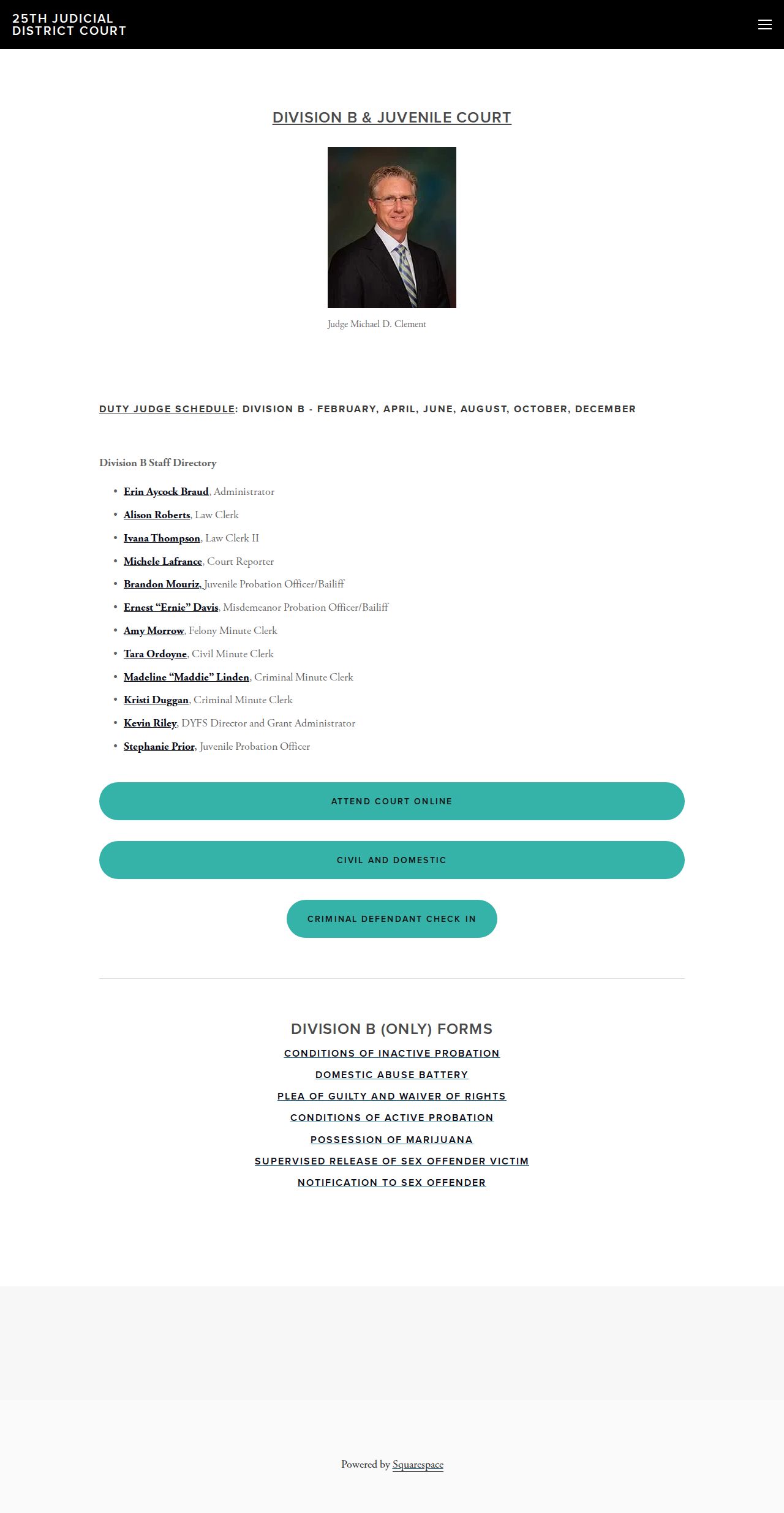
The shared court website shows why subject matter and access rules deserve a look alongside divisions. A calendar category or division page may explain the court's schedule, but it stops short of a full public criminal docket for Plaquemines Parish. Treat those pages as orientation, not as a docket search.
Criminal Case Stages on the Docket
A Plaquemines Parish criminal case picks up steam in stages. First comes the recorded offense, then division allotment, then arraignment in the 25th JDC. At arraignment the court sets motion dates and pretrial dates under the local rules. Felonies work differently. The District Attorney asks to set trial at the pretrial conference. The defendant and defense attorney are there in the room. From that point the docket history can go many ways. It may hold a plea, a trial, a dismissal, a conviction, probation, a post-conviction filing, or an appeal. One note worth keeping in mind: an appeal opens a separate appellate case. Yet the local file stays put with the clerk.
Docket flow: Initial Record › Division Allotment › Arraignment › Motion and Pretrial Settings › Plea or Trial › Disposition or Post-Conviction Activity
When the judge orders something in open court with the defendant and counsel there, the local criminal rules do not require separate written notice. The docket entry captures it on the spot. So trust the latest court action in the Plaquemines Parish criminal docket over any older notice or a broad calendar listing.
Plaquemines Parish Criminal Docket Dates
Start with the public 25th JDC calendar, but know what it is. The calendar runs on Outlook and lists division schedules, not cases. You will see labels for arraignments, felony motions, felony pretrials, misdemeanor trials, traffic court, and drug court. What it rarely shows is a case number, a party name, or the order controlling the matter. Treat it as a context check on a Plaquemines Parish criminal docket date. Then confirm with the clerk or the division itself.
Continuances follow the 25th JDC local rules. A written motion must state the reason. It must arrive no later than one week before the fixed hearing. If the request rests on a missing transcript, it must include a timely written request to the court reporter. This is why a filed motion proves nothing about the date. Only the later minute entry or order moves a hearing. So that is the entry to verify. For wider timing help, see the parish Court Schedule.
Plaquemines Parish Criminal Docket Courts
Plaquemines Parish criminal matters land in the Twenty-Fifth Judicial District Court. It is the parish's general-jurisdiction trial court. Divisions A and B handle felony and misdemeanor cases. The public calendar adds traffic, magistrate, juvenile, and adult drug-court categories to the mix. The elected Plaquemines Parish Clerk of Court keeps the 25th JDC criminal court record. The office also keeps the docket ledger. When the online service cannot supply the history you need, the clerk's criminal department is the right local route. It is not some unnamed statewide portal.
Justice of the Peace courts keep their own limited-jurisdiction ward records. Traffic, wildlife, and lower-court appeals follow a special allotment rule. That rule replaces the ordinary offense-month rule. A sheriff-issued citation, arrest, or warrant is different. It may take a separate request to the Plaquemines Parish Sheriff's Office Criminal Records Office. That law-enforcement file is separate from the court docket. Source: Plaquemines Parish Justice of the Peace and Constables directory
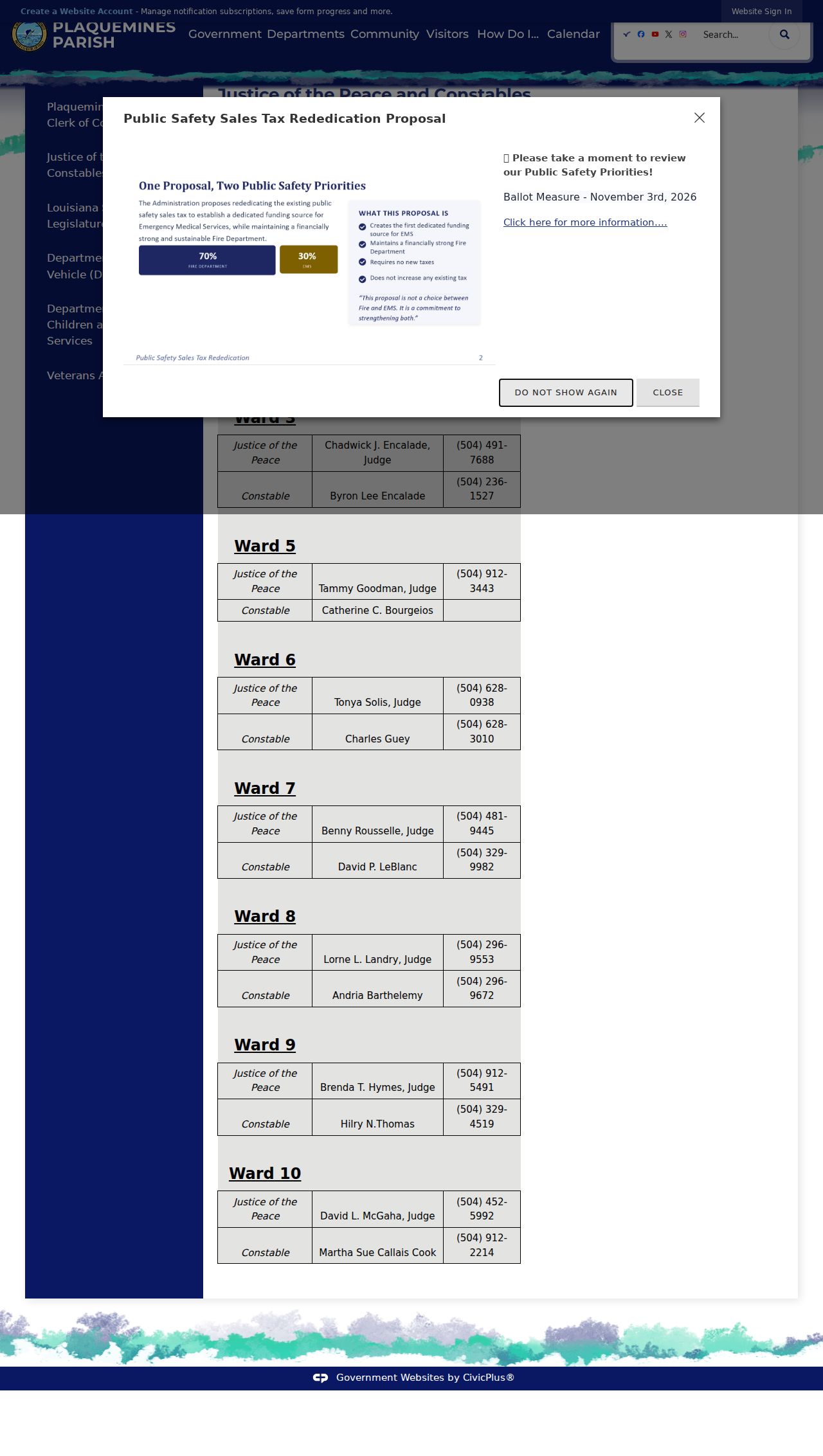
Venue comes first. Before deciding a search came up empty, ask where the record truly lives. It may sit with the 25th JDC, with a particular justice of the peace, or with the Sheriff's office, and each keeps its own files.
Plaquemines Parish Drug Court Dockets
Drug court shows up on the 25th JDC calendar by name. The Division A page ties adult drug court to Division A. No separate public drug-court database appears in the official material. Nor does an eligibility rubric or program-length record. So the activity rides along with its underlying 25th JDC case and division. The calendar names only the category of court work.
Juvenile Court and DYFS/FINS information also appear through a court channel. That is not an open juvenile-docket search. Article 412 of the Louisiana Children's Code keeps juvenile records confidential. FINS records carry extra confidentiality rules. Public court information is not permission to inspect participant-specific juvenile material. Source: the 25th JDC Juvenile Court page
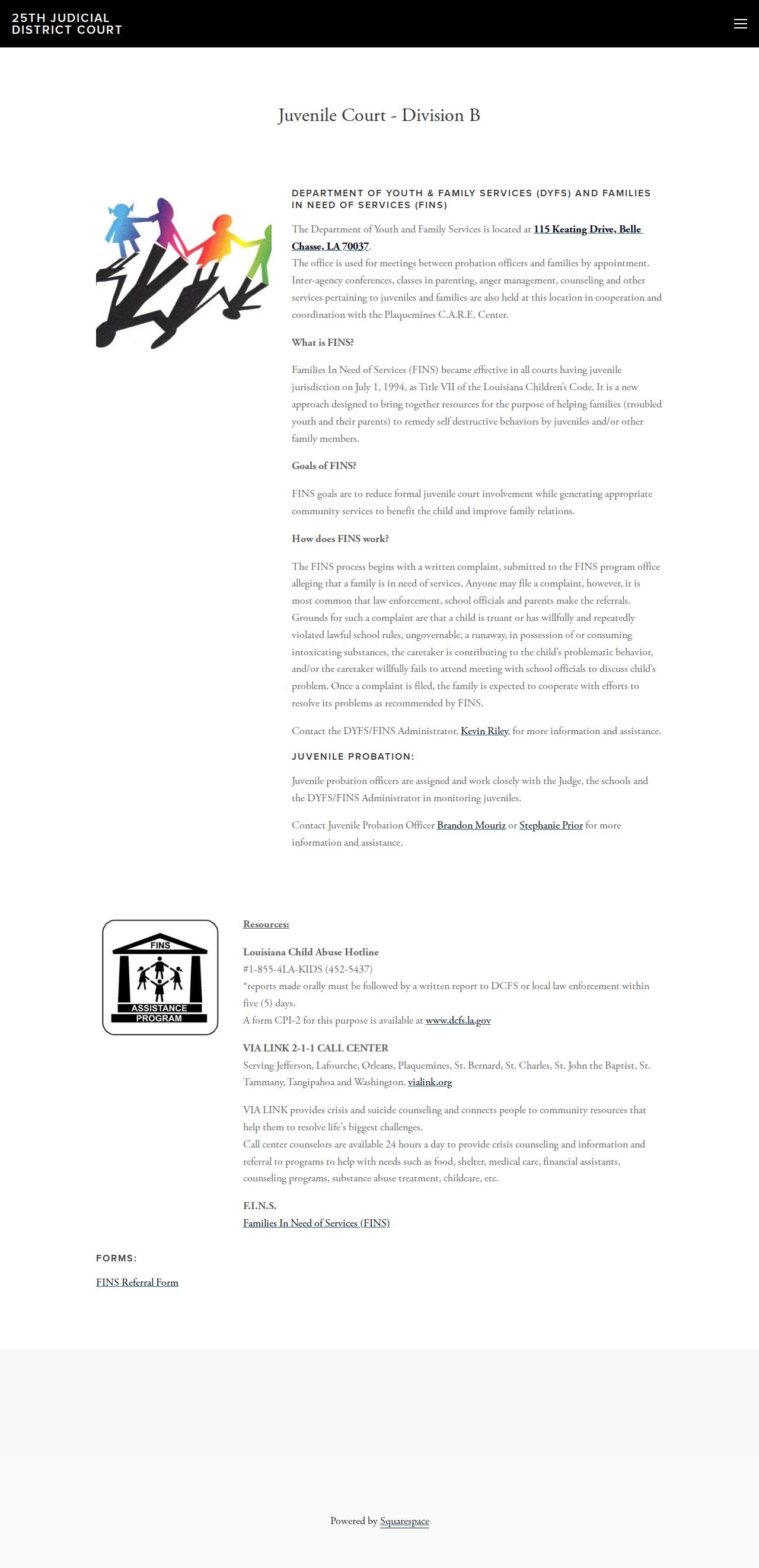
If a juvenile result is missing, use the court-authorized access route. Repeated digs through a public index will not unlock it.
Plaquemines Parish Criminal Record Custodians
The Clerk and the Plaquemines Parish Sheriff's Office hold related but different files. The Clerk keeps the 25th JDC criminal docket and court file. The Sheriff's Criminal Records Office holds a different set. It keeps arrest, warrant, traffic-citation, and sheriff-investigated material. A citation or arrest can lead to a court case. Yet the law-enforcement record is never the court's own docket ledger.
For court minutes, court-file copies, certifications, and docket history, go to the clerk's criminal department. For a sheriff record or citation route, go to the Criminal Records Office. Name the specific document you need up front. That one step avoids a transfer between offices. It also keeps you from requesting a criminal-history search when you really want a court minute or a certified judgment.
Access Rules for Criminal Dockets
Louisiana law names the Clerk as custodian. The public can generally examine and copy court records unless another law restricts access. Locally, criminal files can be examined without an appointment. That holds during published business hours. Inspection is free, and copies carry a charge. The online service is a convenience layer with subscription limits. It does not change the clerk's custodial role. And an online no-result is not proof that no court file exists.
Sealed and juvenile material takes a different route. The clerk directs people seeking juvenile criminal or other sealed records to petition the court. An expunged criminal record is removed from public access. The law does not treat it as destroyed for authorized criminal-justice use. If a request is questioned or denied, ask the custodian for the legal basis and get a written determination. Do not guess at the reason.
Key Rules:
La. C.C.P. art. 251 - Makes the clerk custodian of court records and generally requires public examination and copying unless a restriction applies.
La. R.S. 44:32 - Addresses examination, copies, fees, and a written determination when the custodian questions public access.
La. C.Cr.P. art. 971 - Provides that a qualifying expunged record is removed from public access but not destroyed.
La. C.Cr.P. art. 983 - Addresses expungement costs and exemptions that can affect the official process.